
St. Francois Arrest Reports
Start with a hard truth. St. Francois County posts no official 72-hour, seven-day, or weekly arrest blotter anywhere online. The sheriff points to Mobile Patrol for inmate and booking information. That service does not state how deep its archive goes, how often it updates, or where older entries roll off to. The sheriff's Most Wanted page serves warrant purposes. It is not a booking log.
The city sources stop short too. Farmington posts police information and monthly report links. Park Hills keeps a formal records page, and its city code mentions a daily log if one is maintained. No public log URL exists. Bonne Terre's police page offers contact details without a developed blotter. The accurate conclusion is that an official county blotter is not documented, not that no arrests happened.
Trace Multi-Day Arrest Records
Work backward from the agency and event date rather than expecting one complete list:
- Check Arrested Today first when the event may be new. The sheriff’s Mobile Patrol route is the county’s documented booking entry point.
- Identify the arresting agency. An MSHP event belongs in the patrol arrest-report system; a Farmington, Park Hills, or Bonne Terre matter may begin with that city police department.
- Search the relevant official agency page for releases or published reports. A press release is selective and is not proof that other arrests did not occur.
- Check Missouri Case.net for a filed case and later docket events. A booking may precede a case, and charge language may change.
- Request the arrest or incident report from the agency when the online material is incomplete or has rolled off.
Keep custody, arrest reporting, prosecution, and court outcomes separate. A name vanishing from a roster means little by itself. Cases end in many ways. A court search also lags. A very fresh arrest may not appear until a case is filed. Some closed or protected matters never show in a public name search at all.
St. Francois Report Fields
No uniform county blotter means field sets vary by source. Read the source label. Never fill gaps with assumptions.
| Possible field | What it can and cannot establish |
|---|---|
| Name and identifying data | Helps match a subject; common names and entry errors require another identifier. |
| Arrest date and time | Dates the event, not necessarily booking completion, web publication, or filing. |
| Reporting agency | Identifies the source of the report; it may differ from the holding agency. |
| Alleged offense | States the reported or booked charge, which can be amended or declined. |
| Bond or custody | Describes a reported moment and can become stale after release or transfer. |
| Image | May be absent or illustrative; no county source promises a public booking photo for each event. |
News stories can omit identifiers, merge events, or run a generic image. A police release may cover only cases chosen for notice. When accuracy matters, file an official record request instead.
Selective Local Arrest Coverage
The KFMO St. Francois County tag offers a current, event-driven archive. It can include arrests, pursuits, warrants, jail administration, charges, and court results.
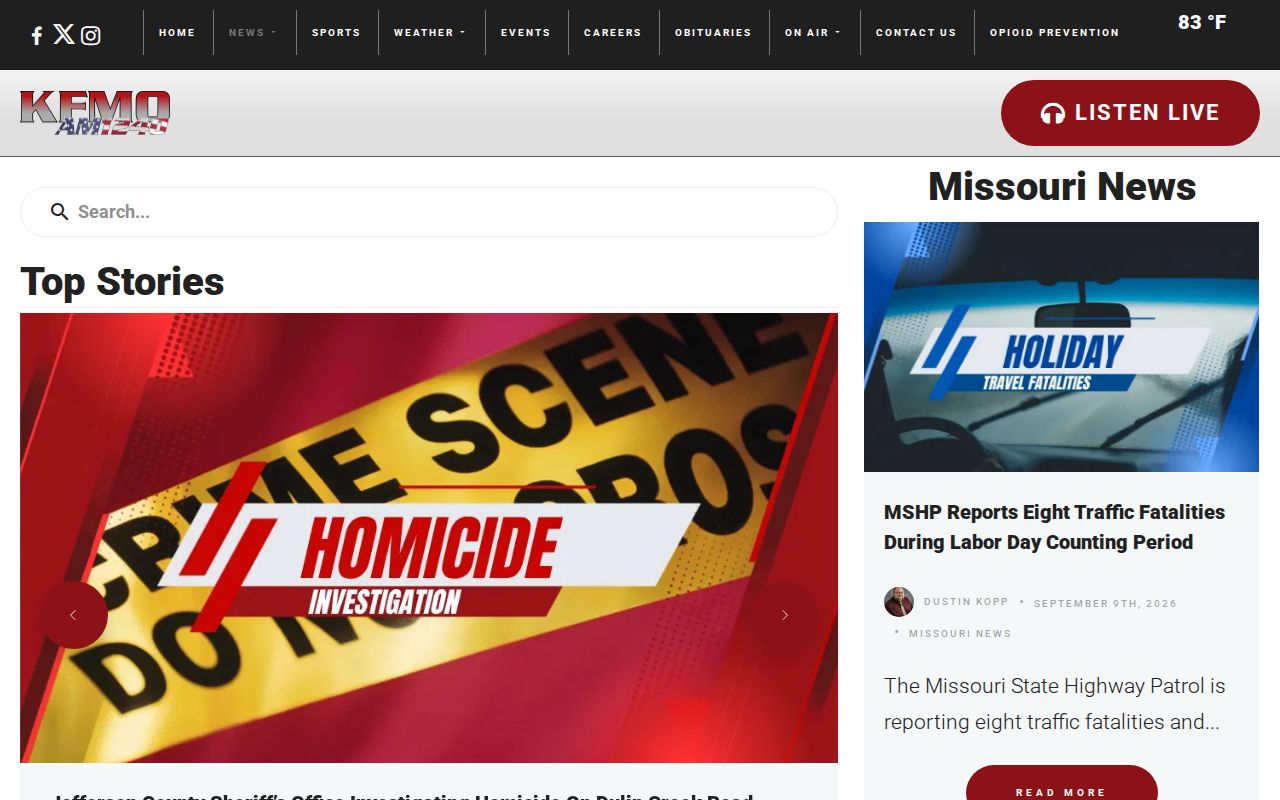
Local news helps, but know its limits. It is not a complete booking feed. A story image is not always a mugshot.
KFMO covers Farmington, Park Hills, Bonne Terre, Desloge, Bismarck, and countywide events. It often credits the sheriff, city police, MSHP, or a release. MyMoNews publishes story-level arrest coverage and sometimes follows a booking with a later charge update. My Mo Info runs sheriff-release stories, and one used a stock Getty image rather than a booking photograph. Treat these outlets as narrative supplements behind official sources.
Third-party arrest aggregators need even more caution. The major services list no live county-local St. Francois section. Do not invent a county URL or mistake a statewide directory for a local archive. Unofficial data can be stale, mislabeled, or stripped of updates. No aggregator belongs in a factual claim about a person.
Historical St. Francois Blotter
Local print once did this job. The Daily Journal's historical Police Blotter gathered arrest information from many sources. Its reach included Farmington, Park Hills, Bonne Terre, Desloge, Bismarck, the county jail, and nearby towns. A 2011 editor note said names were omitted and cautioned that arrests might not be prosecuted. It also promised future blotters in print only. That proves an old editorial format. It does not prove a current online weekly archive.
No present cadence, photo practice, or archive depth is confirmed for that feature. An old article cannot tell you how the paper runs today. Use it to explain why "local blotter" references surface in searches. Then go back to current agency records for a specific event.
Arrest Statistics Are Not Reports
Numbers are not reports. Farmington's official police page lists 761 arrests and 24,431 calls for service for 2024, plus separate crash, stop, summons, and warning counts. Park Hills publishes other activity context. These figures come from different agencies and units. Never add them into a county booking total. An annual statistic describes workload over a period. It cannot name who was booked in a given week. The official Farmington Police page shows how statistics, records information, and department material can share one page without becoming a live blotter.
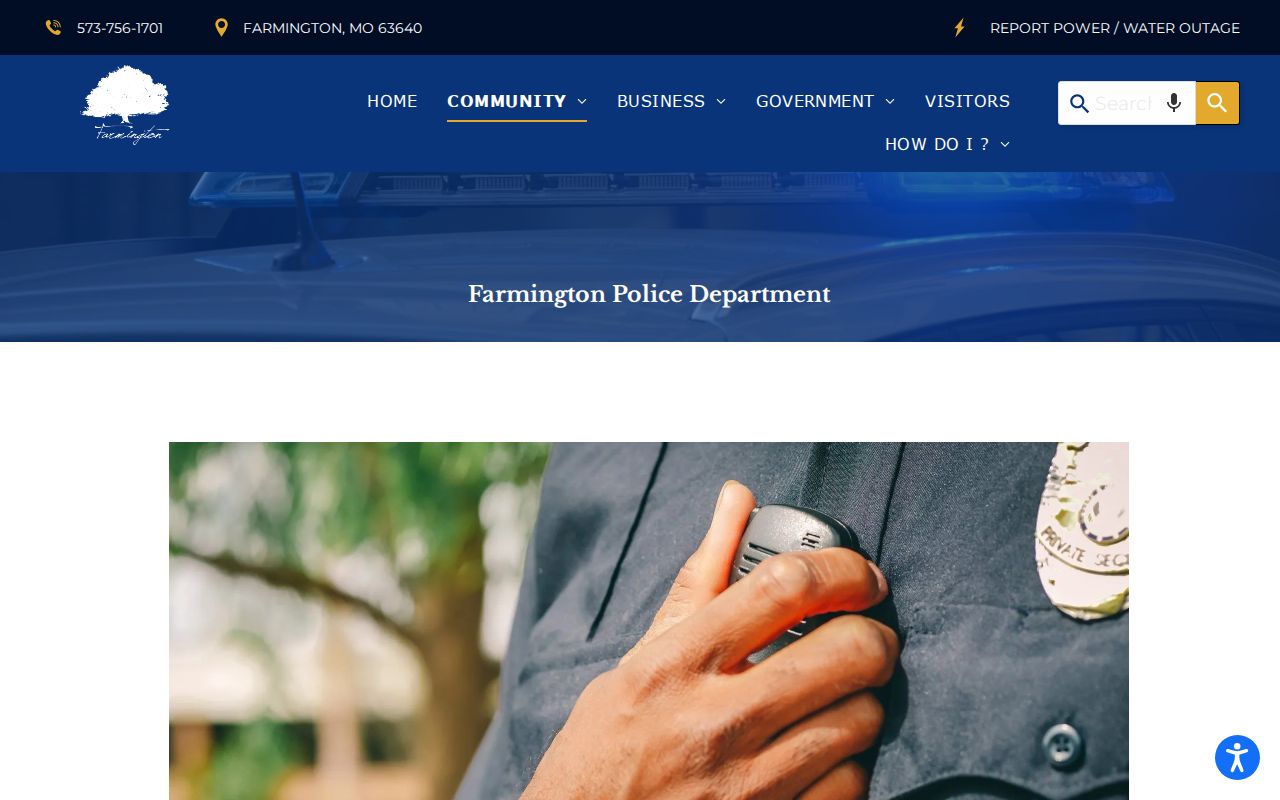
That page is agency context, not a list of current arrestees. News-story counts fail the same way. A radio archive can publish daily yet select only notable events. Keep units straight. Calls are not arrests, and arrests are not bookings. Bookings are not filed charges.
Request Older Arrest Reports
Not every St. Francois County arrest report lives online. When one doesn't, go straight to the agency that wrote it. The county prosecutor's Sunshine process is an official records route. The custodian must respond within three business days. That response may be the record itself. Or it may be a detailed explanation plus a reasonable production timeline. Missouri law still permits closure and redaction in defined situations. So a reply is never a guaranteed release.
Write a request that actually helps. Give the full name and the rough arrest date. Include the agency and any known location, report number, or booking number. Name the specific item you want. That could be an arrest report, an incident report, a booking sheet, or a booking photograph.
is a weaker ask than a precise one. Fees can vary with copies, research, and media, so ask the custodian to explain the charges. Park Hills handles its own city police material through a separate official route.
Missouri's sheriff retention schedule covers SHF 006 arrest records. That series includes arrest logs, files, registers, fingerprints, and booking sheets. Five years is the minimum retention. It is not a promise that old arrests stay visible online for five years. A public app entry can vanish long before the underlying record hits its retention end. A hold, a case need, a closure rule, or another schedule can also shape what remains accessible.
Where Arrest Records Go
A record may drop off a public app. It has not moved into one big shared archive. Where it goes depends on what it is. Current sheriff or police arrest material stays with the agency that created it. Filed cases belong to the court and Case.net. Sentenced state custody falls to the Missouri Department of Corrections. Permanent historical state material may land with the Missouri State Archives. The Circuit Clerk's court holdings are not a jail archive. Treat them as a separate track.
St. Francois County shows no digitized jail booking-photo archive. Sheriff booking files do not routinely flow to the State Archives. Ask the records custodian whether a particular series is still held, transferred, closed, or destroyed. The Archives can confirm what it holds. It cannot rebuild a missing county feed. An archival inquiry works best with an approximate date, agency, facility, and record series.
Arrest Reports Are Accusations
For the current status of any St. Francois County case, confirm with the court that holds it. An arrest report works well as a starting point for a focused public-record request. Use it to verify an arrest. Or follow a court matter as it moves along. Just avoid circulating partial records or images.
Search Public Records
Sponsored Results